
 by Aquariu.ms
Advantages and Disadvantages
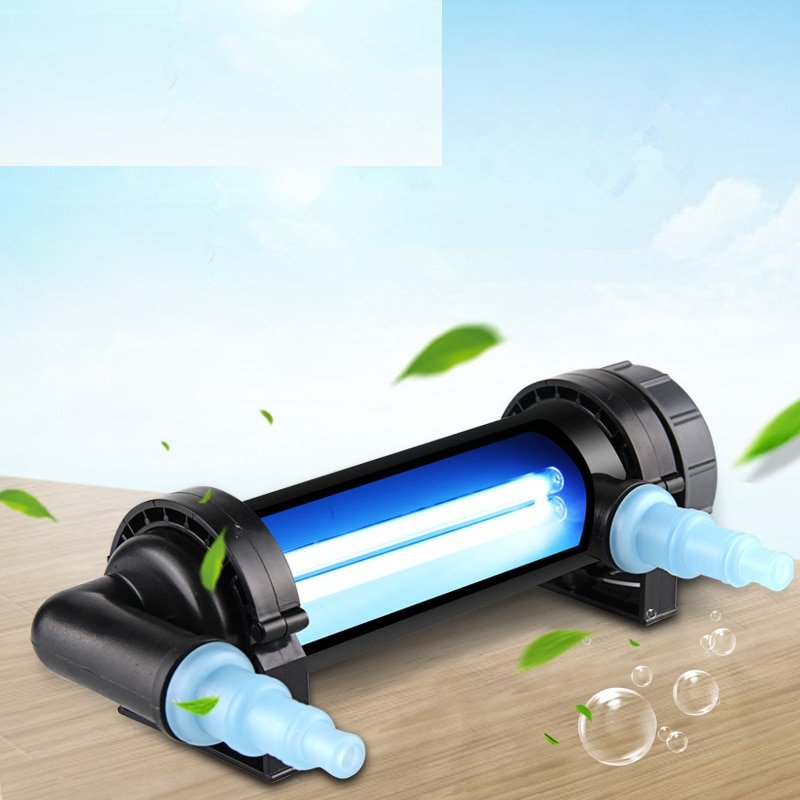
With any piece of aquarium equipment, there are various types of UV sterilizers that all have their advantages and negatives. Some units can be sold as standalone units, some are built into filters, and others can be added into the existing piping of filters, but almost all of them have a rated lifetime for the light before it needs to be replaced (even if it appears to not be burnt out). To be most effective, there should be a flow rate that is controlled to allow for the UV sterilizer to process the water moving past it fully per the given manufacturer's specifications. For most, adding the UV sterilizer at the end of a filter is more effective as the ultraviolet light is not blocked by any debris that may be sucked in at the beginning of the filtration process. It is to be noted, however, that after around 6 months the light may still be turning on/running, however, the effectiveness of the ultraviolet rays it produces will decrease drastically unless there aren't any ultraviolet rays being generated and instead just some visible light.In summary, the advantages of having one include;
- Ability to remove parasites, harmful bacteria, or micro-organisms within the water column.
- Ability to remove free-floating algae within the water column (and keep water green-free).
The disadvantages of having one include;
- They require constant water movement to work, which means it needs to be near your filter, within your filter, or a part of a powerhead unit.
- The bulbs are only good for a certain timeframe (each manufacturer has a different lifespan for their bulbs) and then need to be replaced, even if they still appear to light up.
- They cannot cure fish that are already sick or remove algae that are growing inside of the aquarium on decorations or on the walls.